Single Life · 8 min read
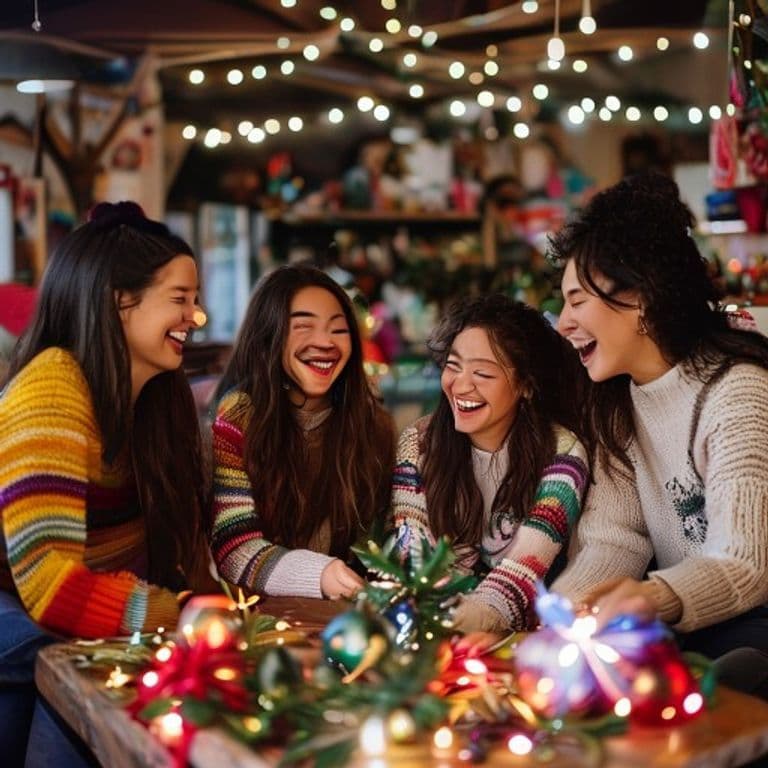
Embracing the 'Single Together' Movement This Holiday Season
This piece explores the growing trend of single women finding community and shared experiences, especially during the holidays, challenging the notion that being single means being alone.
Olivia Rodriguez · December 15, 2021
Our take
For too long, the holiday season has been marketed as a "couple's gauntlet," leaving single women to feel like supporting characters in someone else's romantic comedy. But here at Next Boyfriend, we believe the most important relationship you'll ever cultivate is the one with your community. The "Single Together" movement isn't about giving up on love; it's about refusing to put your joy on hold until a partner arrives. By redefining how we celebrate, we shift the power dynamic from waiting to living, proving that a full heart doesn't require a plus-one.
Key takeaways
- For decades, the cultural narrative surrounding the holidays has been relentlessly binary: you are either blissfully partnered or tragically alone.
- At its core, "Single Together" is the intentional act of building a chosen family.
- There is a profound psychological difference between being alone and being lonely.
- One of the most empowering aspects of this movement is the ability to scrap outdated traditions and build your own.
The Myth of the "Lonely Single"
For decades, the cultural narrative surrounding the holidays has been relentlessly binary: you are either blissfully partnered or tragically alone. From the Hallmark movies to the subtle pressure at family dinner tables, single women are often cast as the "tragic" figure—the one who needs "saving" or the one who is "still looking." This narrative creates a psychological burden, transforming a season of generosity and light into a period of perceived deficiency.
However, as Olivia Rodriguez explores in her original piece for The Atlantic, this narrative is finally cracking. We are witnessing a paradigm shift where singledom is no longer viewed as a waiting room for marriage, but as a valid, vibrant, and often preferred lifestyle choice. The "Single Together" movement is the manifestation of this shift, transforming the isolation of the "solo" experience into the strength of a collective one.
What Exactly is 'Single Together'?
At its core, "Single Together" is the intentional act of building a chosen family. It is the realization that while romantic love is valuable, platonic intimacy is the bedrock of emotional resilience. When women gather to celebrate their independence, they aren't just filling a void; they are creating a new type of social architecture.
This movement challenges the heteronormative assumption that the nuclear couple is the only stable unit of society. By prioritizing friendships and community, women are discovering that the emotional support, laughter, and stability they once sought exclusively in a partner can be found—and often amplified—within a supportive circle of peers.
The Psychology of Shared Experience
There is a profound psychological difference between being alone and being lonely. Loneliness is a feeling of disconnection; being alone is simply a physical state. The "Single Together" approach attacks loneliness head-on by providing "shared experience." When you attend a New Year's Eve party with a group of single friends, the external pressure to "find someone" evaporates because you are already in a space of belonging.
Research in sociology suggests that "third places"—social environments separate from the home and the workplace—are crucial for mental health. For the single woman during the holidays, these curated "Single Together" spaces serve as a vital sanctuary. They provide a safe harbor where the "Why are you still single?" questions are replaced by "What are we doing for brunch tomorrow?"
Designing Your Own Holiday Traditions
One of the most empowering aspects of this movement is the ability to scrap outdated traditions and build your own. When you aren't adhering to the expectations of a partner or an in-law, you have total creative agency over your joy.
Consider the "Anti-Valentine's" or "Solo-Christmas" potluck. Instead of the stress of a formal dinner, a group of single friends might organize a "Favorite Things" exchange, where everyone brings a gift that represents a hobby they discovered while single. This turns the celebration into a showcase of personal growth and autonomy. By proactively organizing these gatherings, women move from the role of the "invited guest" to the "architect of the experience."
Expanding the Horizon: Shared Adventures
The "Single Together" philosophy extends far beyond a single party. It’s about the "shared activity" as a tool for liberation. Many women avoid certain experiences—like traveling to a remote destination, trying a high-end tasting menu, or attending a niche concert—because they don't have a partner to accompany them.
The movement encourages "activity pods." Imagine a group of four single women who decide to spend a long weekend in a cabin, or a group that commits to visiting every holiday market in the city. These experiences amplify the fun and create a shared history. When you travel with friends, the focus shifts from "romanticizing the destination" to "bonding through adventure."
Building a Mutual Support Network
Beyond the parties and the trips, the most enduring part of the "Single Together" movement is the creation of informal support networks. The holidays can be an emotional minefield, triggering feelings of inadequacy or grief over past relationships. Having a dedicated circle of women who "get it" is an invaluable asset.
These networks function as a form of emotional insurance. Whether it's a group text thread to vent about a difficult family interaction or a scheduled "wellness check" call on Christmas Eve, these connections provide a safety net. This is a space where successes—like a promotion or a personal milestone—are celebrated with genuine enthusiasm, free from the competitive or restrictive dynamics that can sometimes permeate romantic partnerships.
Challenging the Stigma in Real Time
To truly embrace being "Single Together," women must also engage in the active work of challenging social norms. This often happens in the heat of the moment: at the family dinner table or in the workplace. When a woman responds to the "When will you find someone?" question with, "I'm actually incredibly happy with the community I've built," she is performing a radical act of social reconfiguration.
This isn't just about defending one's status; it's about promoting a broader acceptance of diverse relationship structures. By modeling a fulfilling single life, women pave the way for others to stop viewing their status as a problem to be solved and start viewing it as a life to be lived.
Navigating the "Couple-Heavy" Social Circle
A common challenge for those embracing this movement is navigating a friend group where everyone else is coupled up. It can be easy to feel like the "fifth wheel," which often leads to self-isolation. The solution is not to abandon these friends, but to diversify your portfolio.
The key is to maintain your "couple friends" while aggressively investing in "single-centric" connections. This creates a balanced social ecosystem. You can still enjoy the stability of your long-term friends, but you have a dedicated "Single Together" squad for the moments when you need someone who truly understands the specific nuances of navigating the world as an independent woman.
The Ripple Effect: Impact on Future Dating
Paradoxically, embracing the "Single Together" movement often makes a woman better at dating when she chooses to engage in it. When you are no longer looking for a partner to "complete" your social life or provide your only source of emotional support, you enter the dating market from a position of strength.
You are no longer dating out of a need for companionship, but out of a desire for a specific kind of addition to an already full life. This eliminates the desperation that often leads to settling for suboptimal partners. A woman who is "Single Together" knows exactly what she brings to the table because she has already built a table of her own.
A New Definition of "The Holidays"
Ultimately, the goal of this movement is to decouple the concept of "holiday cheer" from the concept of "romantic partnership." The holidays should be about connection, reflection, and gratitude. None of these things require a legal contract or a romantic partner to be authentic.
Whether it's through a curated potluck, a group trip, or a simple support system of texts and calls, the "Single Together" movement proves that the most enduring love stories are often the ones we write with our friends.
Conclusion: The Power of the Collective
As we move forward, the societal narrative will continue to evolve. The bravery of women who refuse to be "lonely" while single is creating a new blueprint for modern adulthood. By forging powerful communities and finding strength in shared experiences, women are proving that being single does not mean being alone.
This holiday season, we encourage every reader to look beyond the traditional expectations. Reach out to that friend who is also navigating the season solo. Organize the party. Book the trip. Build the network. In the act of coming together, we find a form of freedom that no single partner could ever provide: the freedom to be completely ourselves, supported by a tribe that loves us exactly as we are.
Questions about Single Life
Is being single bad for your health?
Older studies claiming a partnership benefit largely failed to separate marriage from social connection and income. More recent work finds the health signal is social support and financial stability, both of which single people can and do have.
How do I deal with pressure from family about being single?
Short, warm, repeated answers work better than justifications. A brief line delivered the same way each time removes the reward of a reaction, and explaining yourself in detail invites negotiation about a decision that is not up for negotiation.
How do you know if you are single by choice?
Ask whether you are declining specific people for specific reasons, or declining everyone in advance. Choice looks like turning down a real option; avoidance looks like never having one.
Keep reading
- Guide: Rebuilding Self-Worth: How to Stop Settling and Start Choosing
- Guide: The Intentional Dating Guide: How to Date with Purpose, Not Just Hope

Single Life
Financial Freedom for Single Women: Building Your Independent Future
Financial stability is a cornerstone of an empowered single life. This article outlines key strategies for single women to manage finances, build wealth, and secure their…
Summary of The New York Times · 11 min read

Single Life
Understanding Your Attachment Style as a Single Woman
Your attachment style profoundly influences how you experience singlehood and dating. This article explores the different attachment styles and offers insights for navigating…
Summary of Attachment Project · 8 min read

Single Life
Dating While Single: How to Navigate the Modern Landscape Without Losing Yourself
Re-entering the dating scene as a single woman can be daunting. This article provides practical strategies for maintaining your identity, setting healthy boundaries, and…
Summary of Glamour · 15 min read
Comments
No comments yet.