Dating Apps & Technology · 14 min read
From Swipe Right to 'Are You Serious?': Dodging Red Flags in the Digital Dating Jungle
Navigating online dating can be a minefield of potential red flags. This guide helps you identify warning signs in profiles and initial conversations to protect your time and emotional energy.
Charmaine Lee · October 27, 2023
Our take
This is a briefing on “From Swipe Right to 'Are You Serious?': Dodging Red Flags in the Digital Dating Jungle,” summarized from Facebook and filed under Dating Apps & Technology. Read it as a map of that source’s argument, then use the original before you treat any claim as settled. The useful question for dating is not whether the headline is catchy — it is which part of it changes what you do next.
Written for this page from the title, topic, and named source. It does not add claims that are not in the piece.
Key takeaways
- We've all been there: staring at a screen at 11 PM, thumb hovering over a profile that looks perfect on paper but makes your gut twist in that quiet, insistent way.
- The average dating app user spends roughly three to seven seconds evaluating a profile before swiping.
- Let's start with the obvious: vague or generic profiles.
- Pay close attention to negative or aggressive language — not just hostility, but absence framed as presence.
🎯 The Next Boyfriend Take
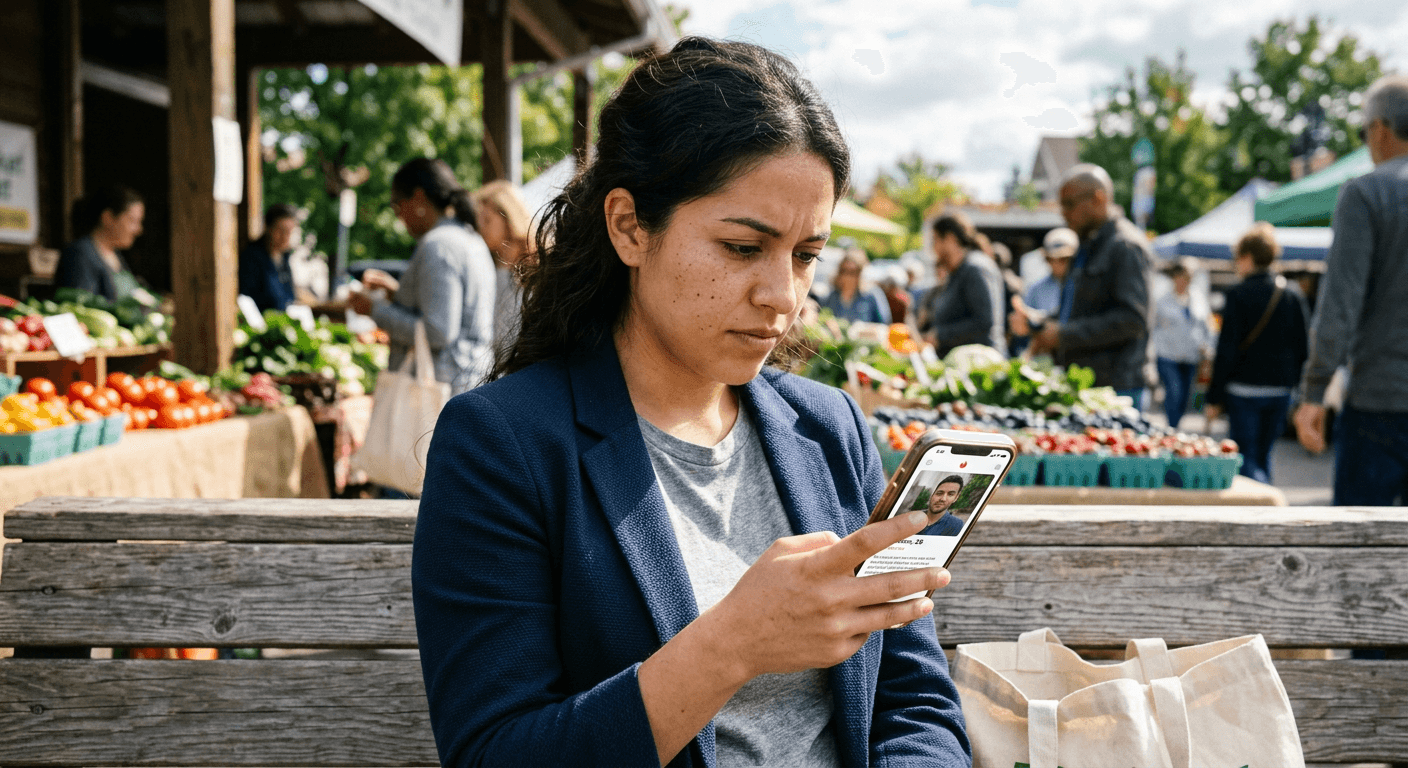
We've all been there: staring at a screen at 11 PM, thumb hovering over a profile that looks perfect on paper but makes your gut twist in that quiet, insistent way. The truth is, digital dating hasn't just changed how we meet people — it's compressed the entire vetting process into a handful of photos and 300 characters, making it dangerously easy to project fantasies onto strangers or, worse, miss the warning signs screaming between the lines. This guide isn't about becoming cynical or treating every match like a suspect; it's about reclaiming your most non-renewable resources — your time, your emotional bandwidth, and your intuition — so you can spot the noise and make room for the signal. Because the goal was never to get good at dating apps. The goal is to get good at choosing you, every single time.
The Anatomy of a Digital First Impression
The average dating app user spends roughly three to seven seconds evaluating a profile before swiping. That's not a judgment — that's cognitive survival. With thousands of potential matches at our fingertips, our brains have evolved rapid-pattern recognition to filter the noise. But speed comes at a cost: we often confuse polish for substance, familiarity for safety, and chemistry for compatibility.
Dr. Helen Fisher, biological anthropologist and chief scientific advisor to Match.com, frames it this way: "The brain's mating system is designed for in-person assessment — pheromones, voice timbre, micro-expressions, the way someone occupies space. Apps strip 90% of that data away. What remains is a curated highlight reel, and our brains desperately try to fill in the blanks with hope."
This is where the red flag scan becomes essential. It's not about paranoia; it's about compensating for missing data. When you can't observe how he treats a waiter or whether he follows through on small promises, you must learn to read the digital breadcrumbs he leaves behind. The profile isn't a resume — it's a behavioral sample. And like any sample, it reveals more than the author intends.
The Profile as a Psychological Self-Portrait
Let's start with the obvious: vague or generic profiles. "I like travel, music, and hanging out with friends" isn't a personality — it's a template. But before you dismiss it as laziness, consider what it might actually signal. According to relationship researcher Dr. John Gottman, how someone presents themselves in low-stakes environments predicts how they'll show up in high-stakes ones. A profile that requires zero vulnerability suggests someone who either (a) doesn't know themselves well enough to articulate it, (b) is hiding behind a safe mask, or (c) is casting the widest possible net with minimal effort.
None of these bode well for the kind of specific, intentional partnership most women on Next Boyfriend are seeking.
Then there's the overly curated photo set — the "Instagram boyfriend" aesthetic. Professional headshots, exotic travel drops, gym progress pics, zero candids. Charmaine Lee flagged this in her original piece, and she's right to be suspicious. A 2022 study in Computers in Human Behavior found that men who used exclusively high-production-value photos on dating apps scored significantly higher on narcissism and self-objectification scales. That doesn't mean every guy with good photos is a narcissist. But it does mean the signal-to-noise ratio warrants scrutiny. Ask yourself: Is this a life I'm being invited into, or a brand I'm being sold?
Excessive bragging or entitlement wears many disguises. Sometimes it's explicit: "6'2", finance, drive a Porsche — don't waste my time." More often, it's subtle: a list of "requirements" longer than his "about me," or language that frames dating as a transaction ("looking for a woman who keeps herself in shape, knows her value, and doesn't play games"). Confidence shares space; entitlement demands it. The difference is palpable once you stop mistaking arrogance for strength.
The Language of Avoidance: What Negative Framing Reveals
Pay close attention to negative or aggressive language — not just hostility, but absence framed as presence. "No drama," "don't waste my time," "not looking for a pen pal," "swipe left if you're [x, y, z]." On the surface, these read as boundaries. In practice, they're often defense mechanisms masquerading as standards.
Psychotherapist and dating coach Esther Perel has noted that "the way we describe what we don't want often reveals what we fear." A profile defined by exclusions suggests someone still reacting to past wounds rather than creating from present clarity. It also signals a dynamic you'll inherit: you'll spend your energy proving you're not the thing he fears, rather than building something new together.
Contrast this with positive framing: "I'm looking for someone who values honest communication, loves spontaneous road trips, and isn't afraid of deep conversations." Same boundaries, entirely different energy. One repels; the other invites. The men worth your time usually know the difference.
The Scam Spectrum: From Catfish to Love Bombing
Charmaine's original piece rightly flags asking for money or personal information too soon as a major scam alert. But modern romance scams have evolved far beyond the "Nigerian prince" archetype. The FBI's Internet Crime Complaint Center (IC3) reported over $1.3 billion lost to romance scams in 2022 alone — and the victims aren't who you'd expect. Educated, professional women 35-55 are disproportionately targeted because scammers know we're looking for connection, and they weaponize that openness.
The new playbook: love bombing via app. Weeks of intense, daily communication. Vulnerability mirroring. Future-faking ("I can't wait to introduce you to my mom / take you to my cabin in Maine / build a life together"). Then — a crisis. A frozen bank account. A medical emergency. A business opportunity that requires "just a short-term loan." By the time the ask comes, the emotional investment is so deep that logic fractures.
Inconsistent stories or evasive answers are your early warning system here. He's "in finance" but vague about his firm. He "travels constantly for work" but can never video chat. His photos don't reverse-image-search cleanly. Trust the friction. As Gavin de Becker writes in The Gift of Fear, "Intuition is always right in at least two important ways: it is always in response to something, and it always has your best interest at stake." If the narrative doesn't hold, you don't need to know why to walk away.
Conversation Dynamics: The Real Compatibility Test
The profile gets you the match. The conversation reveals the human. Charmaine's framework — Are they asking questions? Do they respond thoughtfully? Do they push for personal details too quickly? — is the gold standard. Let's go deeper.
The Reciprocity Ratio
Healthy conversation follows a rhythmic reciprocity: question, answer, follow-up, new question. Research from the University of Kansas found that couples who maintained a roughly 50/50 question-asking ratio during early dating reported higher satisfaction six months later. Not because tallying questions matters, but because curiosity is the language of interest.
If you're three dates into texting and he's never asked about your work, your family, your weird hobby, your anything — that's not "he's shy." That's he's not curious. And curiosity is the prerequisite for intimacy. A man who only talks about himself isn't mysterious; he's monologuing. You're an audience, not a partner.
Response Patterns as Character Indicators
Prompt, thoughtful responses signal respect for your time and investment in the dynamic. One-word answers and long gaps signal... well, a lot of things. Maybe he's genuinely busy. Maybe he's talking to five other women. Maybe he's avoidant. The reason matters less than the pattern. If the rhythm consistently leaves you anxious, checking your phone, rewriting texts — that's your body telling you the dynamic isn't safe.
But beware the opposite extreme: instant, constant, overwhelming availability. The guy who replies in 14 seconds at 2 AM, double-texts if you don't answer in 20 minutes, wants to FaceTime tonight. This isn't enthusiasm — it's often anxious attachment seeking regulation through proximity. It feels flattering until it becomes suffocating. Secure connection has pace. It breathes.
The Premature Intimacy Trap
Pushing for personal details very quickly — your address, your workplace, your trauma history, your sexual preferences — is a boundary violation disguised as "deep connection." Secure people build safety before requesting vulnerability. They understand trust is earned in drops, not demanded in buckets.
A common manipulation tactic: "I feel like I can tell you anything / I've never connected like this / you're different." This is forced teaming — creating false intimacy to bypass your defenses. If it feels too deep too fast, it is. Slow down. Anyone worth keeping will still be there when you're ready.
The Intuition Muscle: Training Your Internal Radar
Charmaine closes with the most critical point: trust your intuition. But here's what nobody tells you — intuition isn't magic. It's pattern recognition at subconscious speed. Your brain has processed millions of micro-data points — tone, timing, word choice, inconsistency, somatic cues — and delivered a verdict before your conscious mind catches up.
The problem? We've been socialized to doubt that verdict. "I'm being picky." "He's probably just nervous." "I should give him a chance." Every time you override your gut, you weaken the signal. Every time you honor it — even (especially) when it makes no logical sense — you strengthen it.
Practical Intuition Calibration
Try this exercise: The 24-Hour Rule. When a match triggers a vague unease — not a dealbreaker, just a hmm — pause. Don't unmatch. Don't confront. Just... wait 24 hours before responding. Observe what happens in you. Does the unease crystallize into clarity? Does it dissipate? Does he follow up respectfully, or does he escalate? The space is the data.
Another tool: The Friend Filter. Screenshot the profile/conversation (redact identifying info). Send to your most discerning girlfriend with one question: "What's your read?" Not "do you like him?" — what do you see? External perspective cuts through projection. If three trusted women flag the same thing, believe them.
Red Flags by Dating Stage: A Quick-Reference Framework
Because context shifts, here's a stage-based cheat sheet you can save:
| Stage | Green Flags | Yellow Flags (Proceed with Awareness) | Red Flags (Disengage) |
|---|---|---|---|
| Profile | Specific interests, recent photos, positive framing, clear intentions | Some generic phrases, 1-2 older photos, minimal bio | All group photos, no bio, negative/entitled language, inconsistencies |
| Early Chat (0-5 exchanges) | Asks questions, matches effort, respects pace, uses your name | Slow responses, brief answers, doesn't initiate topics | One-word replies, sexualizes immediately, asks for nudes/address, love bombs |
| Deepening Chat (1-2 weeks) | Consistent rhythm, shares vulnerably appropriately, plans move to call/date | Inconsistent availability, vague on logistics, avoids video | Ghosts/reappears, future-fakes, trauma-dumps, pushes boundaries |
| Pre-Date / Early Dates | Confirms plans, on time, asks follow-ups, treats staff well | Nervous but present, slight over-drinking, phone visible | Late/no notice cancellation, rude to service, monologues, negs you |
The Cost of Ignoring Red Flags: A Reality Check
We ignore red flags for understandable reasons: loneliness, attraction, sunk cost ("I've already invested two weeks"), hope ("he'll change"), fear of starting over. But the data is brutal.
A 2021 longitudinal study in Journal of Social and Personal Relationships tracked 400 dating couples for 18 months. Participants who reported "ignoring early warning signs" were 3.2x more likely to experience emotional abuse, financial entanglement, or prolonged breakup recovery. The average time wasted on "hopeless" connections? 6-14 months.
Six to fourteen months of your one wild and precious life. Spent managing someone else's chaos, soothing your own anxiety, shrinking to fit a container that was never built for you.
This isn't fear-mongering. It's math. Every hour you spend decoding mixed signals, soothing avoidant pull-backs, or performing worthiness for someone who hasn't earned your trust — that's an hour not spent building a life with someone who doesn't make you guess.
Building Your Personal Red Flag Protocol
Knowledge without system is just anxiety. Here's a practical protocol you can implement this week:
1. Define Your Non-Negotiables (3-5 Max)
Not preferences — non-negotiables. Examples: "Consistent communication," "Emotional accountability," "Wants children," "Treats service workers with respect." Write them down. Memorize them. These are your filter. If a match violates one, no explanation needed. You don't debate non-negotiables.
2. The "Three-Strike" Conversation Rule
Strike 1: He doesn't ask a single question in 5+ exchanges. → Note it. Strike 2: He disappears for 48 hours, returns with "hey" and no acknowledgment. → Note it. Strike 3: He makes a "joke" that demeans you or women generally. → Unmatch. No drama. No confrontation. Just data → decision.
3. Schedule Your App Time
Limit swiping/chatting to two 20-minute windows daily. This prevents the dopamine-loop burnout that clouds judgment. When you're not in the app, you're living your life — which makes you more attractive, more grounded, and less desperate for any match to "work."
4. The Video Call Gatekeeper
No first date without a 15-minute video call. Period. It filters catfish, verifies vibe, and saves you 3+ hours of getting ready/driving/chatting with someone whose voice makes you cringe. If he resists ("I hate video calls," "let's just meet"), he's telling you exactly how he handles discomfort. Believe him.
5. Post-Date Debrief Template
After every date, journal (or voice-memo) three questions:
- How did I feel in my body during the date? (Relaxed? Tight? Performative? Alive?)
- Did he ask about me? Remember details? Follow up?
- Would I want my best friend/sister/daughter to date this version of him?
Patterns emerge fast. Trust them.
When the Red Flag Is You: A Compassionate Mirror
Sometimes the most uncomfortable truth: we attract what we tolerate. If you consistently match with avoidant men, it's not because "all men are trash." It's because your nervous system recognizes that dynamic — it feels like home, even if home was unsafe.
This isn't victim-blaming. It's empowerment. The same intuition that spots his red flags can spot your patterns: over-giving, excusing, hoping potential into reality, confusing anxiety for chemistry. Therapy helps. So does community. So does the radical act of staying single until the dynamic feels like peace, not a project.
As Charmaine wrote: "Prioritizing your safety and mental peace is always the right move." Not "sometimes." Not "when it's convenient." Always. Because the woman who protects her peace becomes the woman who attracts peace. And that woman? She doesn't need a red flag guide. She is the green flag.
The Bigger Picture: Reclaiming the Narrative
Digital dating isn't a minefield. It's a tool — clumsy, imperfect, occasionally toxic, but a tool nonetheless. The minefield is unexamined engagement. The safety is conscious participation.
Every time you swipe left on a vague profile, you're saying: I deserve specificity. Every time you unmatch a love-bomber, you're saying: I deserve pace. Every time you honor a gut "no" before logic catches up, you're saying: I trust myself.
That's not defense. That's sovereignty.
The right man — the one who asks questions and remembers answers, who shows up consistently and communicates clearly, who sees your boundaries as information about how to love you better — he isn't hiding behind a red flag. He's standing in the open, waiting for a woman who knows her worth well enough to walk toward him without flinching.
Be that woman. The app is just the meeting place. The work — the real work — is becoming the person who recognizes him when he arrives.
Charmaine Lee is a contributing editor at Next Boyfriend and the voice behind Charmaine's Corner, where she writes about modern dating with equal parts wit, warmth, and zero tolerance for nonsense. Follow her on Instagram for weekly "Red Flag Friday" breakdowns.
Questions about Dating Apps & Technology
Which dating app is best?
It depends entirely on your goal. Apps skew differently by intent, age, and region — some toward serious relationships, some toward volume and casual meeting. Match the app to your goal rather than joining whichever is largest, and read platform-specific reviews before investing time.
How do dating app algorithms work?
Most rank profiles using a desirability score derived from how people who have swiped on you behave, then show you profiles with similar scores. Activity matters too: recent, frequent, selective users generally get more visibility than dormant accounts that like everyone.
Why do I get so few matches?
Usually photos and specificity, in that order. Clear, well-lit, face-forward lead photos outperform group shots and filtered images, and profiles with concrete detail give people something to respond to. Swiping selectively rather than mass-liking also improves how the algorithm ranks you.
Keep reading
- Guide: The Intentional Dating Guide: How to Date with Purpose, Not Just Hope
- Guide: Rebuilding Self-Worth: How to Stop Settling and Start Choosing

Dating Apps & Technology
Is Romance That Begins Online Less Fulfilling?
Is Romance That Begins Online Less Fulfilling? How to strengthen a relationship regardless of how it began. - The Science of Mating Too Many Choices One of the most well-known…
Summary of Psychologytoday · 8 min read

Dating Apps & Technology
Dating App Statistics (2026): Market Growth, User Behavior, and AI Trends
Dating App Statistics (2026): Market Growth, User Behavior, and AI Trends 10 min read Frank L. TLDR; With global revenue for dating apps projected to reach $3.24 billion in 2026…
Summary of Getstream · 15 min read

Dating Apps & Technology
Principal Data & Analytics Strategist - Mayo Clinic Careers
Leveraging Enterprise Architecture to construct integration centricity, promote data liquidity, and provide innovation support. This transformation creates, ...
Summary of Jobs · 10 min read
Comments
No comments yet.