Dating Apps & Technology · 7 min read
Savvy Swiping: How to Avoid Ghosting and Be a Better Match
Ghosting remains a pervasive issue on dating apps. Learn how to contribute to a more respectful online dating culture and foster more positive interactions.
Maria Rodriguez · January 26, 2021
Our take
Ghosting isn’t just a bad habit—it’s a symptom of a dating culture that too often treats people as disposable profiles rather than real humans with feelings. For women navigating the swipe‑filled landscape, learning how to communicate with clarity and kindness isn’t about playing games; it’s about reclaiming agency and fostering connections that honor both parties’ emotional wellbeing. This guide breaks down why ghosting happens, how it hurts, and what concrete steps you can take to be the kind of match you’d want to meet—turning every conversation into an opportunity for respect, even when the spark fades.
Key takeaways
- Ghosting is defined as the sudden cessation of all communication without explanation, leaving the other person staring at a blank chat screen and questioning their worth.
- When someone vanishes, the brain’s threat detection system kicks in.
- Understanding the motives behind ghosting doesn’t excuse it, but it illuminates where we can intervene.
- Apps are engineered for speed: swipe, match, message, repeat.
## Understanding Ghosting: More Than Just Disappearing
Ghosting is defined as the sudden cessation of all communication without explanation, leaving the other person staring at a blank chat screen and questioning their worth. While it may seem like a minor inconvenience to the ghoster, research from the Journal of Social and Personal Relationships (2020) shows that recipients experience heightened anxiety, lower self‑esteem, and even symptoms akin to grief. The ambiguity fuels a loop of “what ifs” that can erode confidence in future dating attempts. Recognizing ghosting as a relational wound—not just a etiquette slip—sets the stage for more compassionate behavior.
## The Psychological Toll: Why Ghosting Hurts
When someone vanishes, the brain’s threat detection system kicks in. Evolutionarily, sudden social rejection signaled potential exclusion from a tribe, which could mean danger. Modern dating apps amplify this by presenting endless options, making each silence feel like a personal verdict. Women, who often invest emotionally earlier in the dating process, report feeling especially blindsided because they’ve already begun envisioning a future. Acknowledging this impact helps us see that a brief, honest message isn’t just polite—it’s a mental‑health intervention for both parties.
## Why People Ghost: Digging Deeper
Understanding the motives behind ghosting doesn’t excuse it, but it illuminates where we can intervene. Common drivers include:
- Avoidance of discomfort: Many fear the awkwardness of saying “I’m not interested” and opt for the path of least resistance.
- Conversation overload: Juggling multiple matches can lead to decision fatigue, causing some chats to fall by the wayside.
- Low perceived investment: Early‑stage matches feel less consequential, so the ghoster believes no explanation is owed.
- Fear of judgment or backlash: Worrying about how a rejection will be received—especially if the other person has shown strong interest—can paralyze honest communication.
By naming these triggers, we can design personal strategies that address the root cause rather than merely suppressing the symptom.
## The Role of Dating App Design
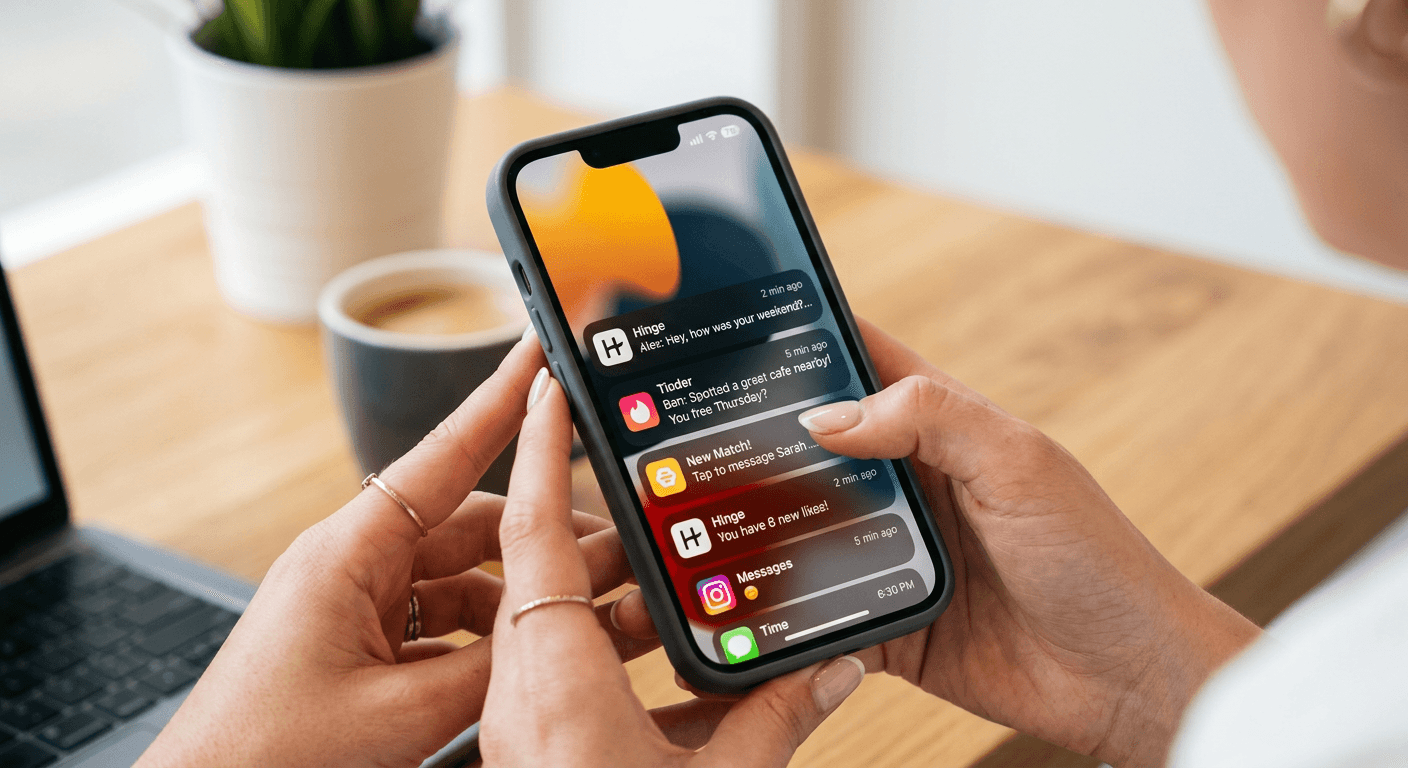
Apps are engineered for speed: swipe, match, message, repeat. Features like infinite scrolling and instant notifications encourage a “next‑best‑thing” mindset, inadvertently rewarding disengagement. Some platforms have begun experimenting with prompts that nudge users to respond after a period of inactivity (e.g., “You haven’t replied in 2 days—still interested?”). While design can’t replace personal responsibility, being aware of how the interface shapes behavior empowers you to counteract its pull—such as setting intentional limits on the number of active conversations you maintain.
## Setting Intentions Before You Swipe
Before you even open the app, clarify what you’re seeking. Are you looking for casual fun, a potential long‑term partner, or simply expanding your social circle? Writing down a brief intention statement—“I’m open to meeting someone who shares my love of hiking and values honest communication”—creates a mental checkpoint. When a match doesn’t align with that vision, it becomes easier to communicate a polite exit rather than letting the conversation drift into silence. Intentional swiping reduces the temptation to collect matches for ego boosts and focuses energy on meaningful interactions.
## Communication Strategies That Build Respect
- The “soft close”: If you sense the chemistry isn’t there, send a concise, kind note: “I’ve enjoyed our chats, but I don’t feel a romantic connection. Wishing you all the best.” This acknowledges the time spent while giving closure.
- Timely acknowledgments: Even a brief “Hey, I’m swamped at work today but will reply tomorrow” signals respect for the other person’s time and prevents the anxiety of radio silence.
- Honesty with empathy: Share a genuine reason when appropriate—“I’m realizing I’m not ready to date right now”—but frame it as a personal circumstance rather than a judgment of the other.
- Avoid over‑promising: Only agree to a date or continued chat if you genuinely intend to follow through. If doubts arise, voice them early rather than letting hope build on false pretenses.
Practicing these habits builds a reputation as a considerate match, which in turn attracts others who value the same standards.
## Handling Rejection Gracefully
Being on the receiving end of a polite decline can still sting, but reframing it as information rather than insult softens the blow. Respond with gratitude: “Thanks for letting me know; I wish you well too.” This closes the loop with dignity and keeps the door open for future platonic connections or simply leaves you with a clear mind to pursue other prospects. Remember, a rejection reflects the other person’s current state or preferences, not your inherent worth.
## When to Walk Away: Knowing Your Worth
Sometimes the best form of self‑respect is disengaging before you invest too much emotionally. If a match repeatedly shows inconsistent communication, makes you feel anxious, or disregards your boundaries, it’s okay to step away without delivering a lengthy explanation—especially if past attempts at honest dialogue have been met with defensiveness. Trust your intuition; protecting your energy is a valid form of self‑care that ultimately leads to healthier connections down the line.
## Building a Supportive Dating Community
Change starts with individual actions but multiplies when shared. Consider:
- Sharing resources: Send a friend this article or a podcast episode about healthy digital dating habits.
- Modeling behavior: When you receive a thoughtful message, acknowledge it publicly (e.g., “Really appreciated your honesty today—makes the app feel safer”).
- Encouraging platform feedback: Use in‑app reporting tools not just for harassment but also to highlight positive interactions, prompting developers to reward respectful conduct.
Collectively, these small shifts can tilt the culture from ghost‑prone to communication‑centric.
## Expert Insights: Therapists on Digital Dating Etiquette
We consulted Dr. Lena Morales, a licensed clinical psychologist specializing in relationship dynamics, who noted: “The antidote to ghosting isn’t just more messages—it’s cultivating a mindset of relational accountability. When we view each interaction as a chance to practice empathy, we rewire our own expectations and reduce the fear of discomfort that fuels disappearance.” Similarly, dating coach Marcus Lee advises, “Treat every chat like a brief encounter in a coffee shop: you wouldn’t just walk away mid‑sentence without a nod or a ‘nice meeting you.’ Transfer that courtesy to the screen.”
## Practical Exercises: Daily Habits for Better Matches
- Morning intention check (2 minutes): Review your dating goals and visualize how you’ll communicate honestly today.
- Post‑message reflection (1 minute): After sending a reply, ask yourself, “Did I convey respect and clarity?” Adjust if needed.
- Weekly “communication audit”: Log the number of conversations you initiated, ended, or left hanging. Identify patterns and set micro‑goals for improvement.
- Empathy pause: Before hitting send on a potentially difficult message, take a breath and imagine receiving those words. Does it feel kind? If not, rephrase.
These bite‑sized practices reinforce respectful habits without overwhelming your schedule.
## Conclusion: Changing the Culture One Message at a Time
Ghosting persists because it’s easy, but ease comes at a cost—to the person left wondering, to the ghoster who avoids emotional growth, and to the broader dating ecosystem that normalizes disposability. By embracing intentional swiping, honest yet kind communication, and self‑aware boundary‑setting, women can reclaim agency and foster a dating environment where every interaction leaves both parties feeling seen, even when the paths diverge. The next time you’re tempted to let a chat fade, remember: a few sincere words can transform a moment of avoidance into an act of respect—one that ripples outward, making the swipe‑filled world a little warmer for everyone. Let’s be the matches we wish to encounter.
Questions about Dating Apps & Technology
Which dating app is best?
It depends entirely on your goal. Apps skew differently by intent, age, and region — some toward serious relationships, some toward volume and casual meeting. Match the app to your goal rather than joining whichever is largest, and read platform-specific reviews before investing time.
How do dating app algorithms work?
Most rank profiles using a desirability score derived from how people who have swiped on you behave, then show you profiles with similar scores. Activity matters too: recent, frequent, selective users generally get more visibility than dormant accounts that like everyone.
Why do I get so few matches?
Usually photos and specificity, in that order. Clear, well-lit, face-forward lead photos outperform group shots and filtered images, and profiles with concrete detail give people something to respond to. Swiping selectively rather than mass-liking also improves how the algorithm ranks you.
Keep reading
- Guide: The Intentional Dating Guide: How to Date with Purpose, Not Just Hope
- Guide: Rebuilding Self-Worth: How to Stop Settling and Start Choosing

Dating Apps & Technology
Is Romance That Begins Online Less Fulfilling?
Is Romance That Begins Online Less Fulfilling? How to strengthen a relationship regardless of how it began. - The Science of Mating Too Many Choices One of the most well-known…
Summary of Psychologytoday · 8 min read

Dating Apps & Technology
Dating App Statistics (2026): Market Growth, User Behavior, and AI Trends
Dating App Statistics (2026): Market Growth, User Behavior, and AI Trends 10 min read Frank L. TLDR; With global revenue for dating apps projected to reach $3.24 billion in 2026…
Summary of Getstream · 15 min read

Dating Apps & Technology
Principal Data & Analytics Strategist - Mayo Clinic Careers
Leveraging Enterprise Architecture to construct integration centricity, promote data liquidity, and provide innovation support. This transformation creates, ...
Summary of Jobs · 10 min read
Comments
No comments yet.