Dating Apps & Technology · 8 min read
The Best Dating Apps for Serious Relationships: Finding Love, Not Just Likes
Tired of casual encounters? This guide sifts through the myriad dating apps to recommend platforms specifically designed for those seeking commitment, long-term partners, and meaningful connections.
Lacy Schablow · March 12, 2026
Our take
Let’s be honest: the "swipe fatigue" is real, and for many of us, it feels like we're scrolling through a digital catalog of people who are just bored or looking for a temporary distraction. There is a profound difference between a "match" and a "connection," and the modern dating landscape often confuses the two. At Next Boyfriend, we believe your time is your most precious asset; spending it on apps that reward superficiality is a recipe for burnout. This guide is about shifting your strategy from quantity to quality, moving away from the dopamine hit of a like and toward the steady build of a partnership.
Key takeaways
- For the last decade, dating technology has been dominated by the "gamification" of romance.
- Hinge has carved out a unique space by branding itself as "the dating app designed to be deleted." This isn't just a clever marketing slogan; it's reflected in the app's core architecture.
- One of the most persistent stressors in digital dating is the "waiting game"—the anxiety of wondering if a match will actually reach out.
- While newer apps focus on UX and "vibes," legacy platforms like Match.com and eHarmony operate on a fundamentally different philosophy: the "investment" model.
The Great Disconnect: Why "Casual" Became the Default
For the last decade, dating technology has been dominated by the "gamification" of romance. The swipe-left, swipe-right mechanic transformed the search for a partner into a high-speed sorting exercise. While this worked for those seeking low-stakes encounters, it created a systemic hurdle for women seeking commitment. When the interface encourages rapid-fire decision-making based on three photos, the nuance of personality and shared values gets lost in the shuffle.
This "hookup culture" isn't just a social trend; it's a byproduct of app design. When apps prioritize the number of matches over the depth of the connection, users are conditioned to treat people as disposable. However, as Lacy Schablow notes in her analysis for The Strategist, there is a growing counter-movement. More women are opting out of the "infinite scroll" in favor of platforms that act as filters rather than nets, prioritizing intentionality over accessibility.
Hinge: The Architecture of Intention
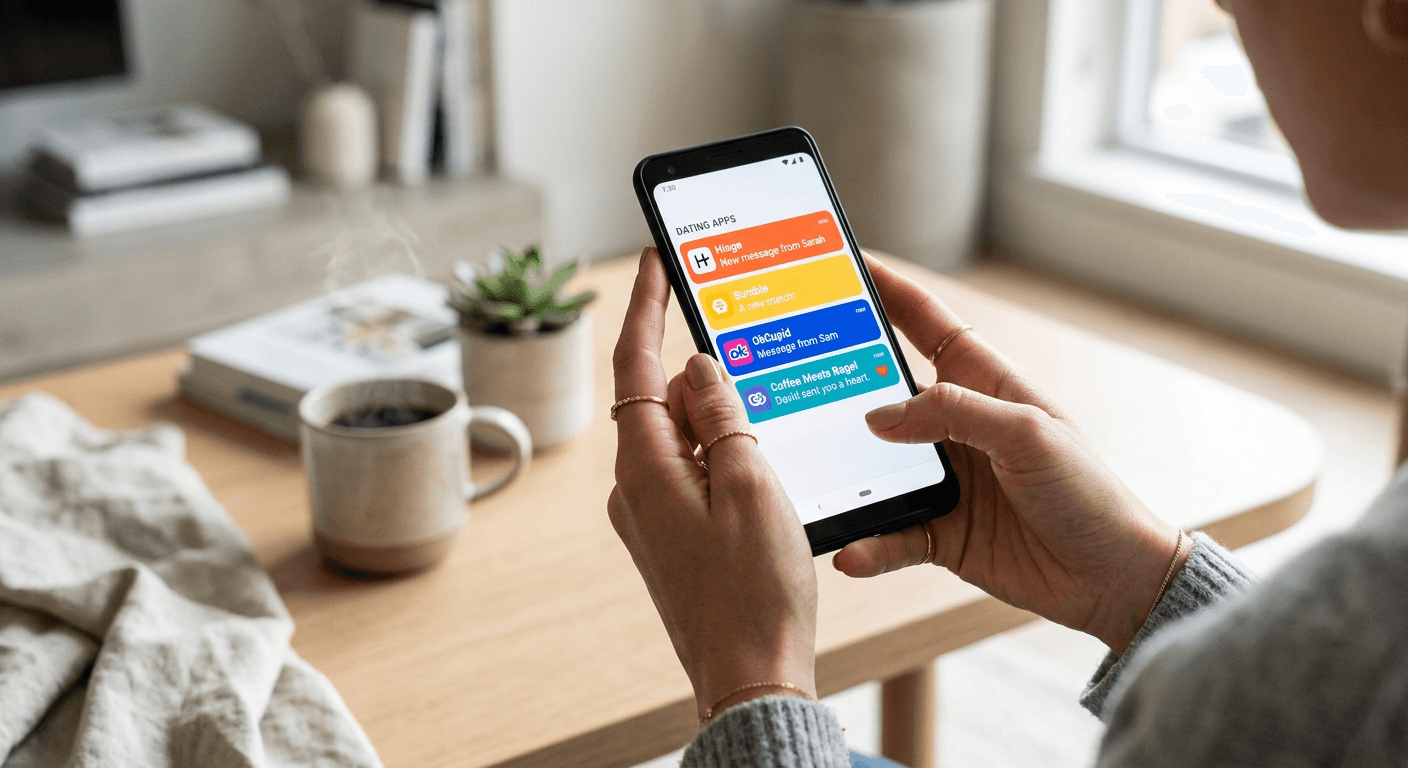
Hinge has carved out a unique space by branding itself as "the dating app designed to be deleted." This isn't just a clever marketing slogan; it's reflected in the app's core architecture. By replacing the binary swipe with "prompts"—short, quirky questions that require a written response—Hinge forces users to showcase their personality before a match even occurs.
For the serious dater, this is a game-changer. Instead of wondering if a man is capable of holding a conversation, you can see his wit, his values, or his weirdly specific passion for 1970s cinema right in his profile. This lowers the "small talk" barrier. When you like a specific prompt, you aren't just saying "you're hot"; you're saying "I find this specific part of your personality intriguing." This shift in dynamics creates a foundation of substance from the very first interaction.
Bumble: Reclaiming the Power of the First Move
One of the most persistent stressors in digital dating is the "waiting game"—the anxiety of wondering if a match will actually reach out. Bumble’s "Date Mode" solves this by putting the initiation power squarely in the hands of women. By requiring the woman to send the first message, the app effectively filters out the passive participants and puts the user in the driver's seat of her own romantic trajectory.
Beyond the mechanics, this structure encourages a more intentional approach. When you are the one initiating, you can set the tone of the conversation immediately. You can steer the dialogue away from "Hey" and toward meaningful inquiries about their life goals or weekend rituals. This agency reduces the feeling of being a passive recipient of attention and transforms the process into an active selection process.
The Legacy Platforms: Match.com and eHarmony
While newer apps focus on UX and "vibes," legacy platforms like Match.com and eHarmony operate on a fundamentally different philosophy: the "investment" model. Because these platforms often involve a subscription fee or a significant time commitment during signup, they naturally attract a user base that is more serious about the outcome.
Match.com remains a powerhouse for those who prefer detailed profiles and robust search filters. It appeals to a demographic that values transparency—people who are willing to write a paragraph about their life philosophy rather than relying on a few emojis. eHarmony takes this a step further with its famous compatibility questionnaire. By utilizing a proprietary system based on core values and personality traits, eHarmony attempts to remove the guesswork. For the woman who knows exactly what she needs in a partner—be it shared religious views, financial alignment, or family goals—this scientific approach can save months of wasted dates.
The League: Vetting for the High-Achiever
For the ambitious, career-driven woman, the frustration of dating often stems from a misalignment of drive and lifestyle. The League addresses this by implementing a vetting process. By linking to LinkedIn and utilizing a waiting list, the app creates a curated community of professionals.
The appeal here isn't just about status or salary; it's about lifestyle compatibility. A partner who understands the pressures of a high-stakes career or the discipline required to reach a certain professional level often makes for a more supportive long-term partner. By narrowing the pool to those with similar ambitions, The League reduces the friction that often occurs when two people have fundamentally different rhythms of life and work.
The Anatomy of a "Serious" App: What to Look For
When evaluating a new platform, it's important to look past the interface and examine the underlying incentives. As identified in the original research by Schablow, apps designed for commitment typically share four key characteristics:
- High-Friction Profiles: If an app makes it too easy to sign up (e.g., just a phone number and two photos), it will attract casual users. Look for apps that require prompts, bios, and detailed preference settings.
- Value-Based Algorithms: Move away from "location-only" matching. Seek out platforms that ask about your views on children, politics, religion, and lifestyle.
- Intentional User Bases: The "vibe" of an app is dictated by who is using it. If the primary demographic is college students looking for a "summer fling," it's not the place for a life partner.
- Slow-Burn Mechanics: Avoid apps that encourage "rapid-fire" interaction. Look for features that reward thoughtful engagement over sheer volume.
Crafting Your "Commitment-Ready" Profile
Choosing the right app is only half the battle; the other half is how you present yourself. Many women make the mistake of being "too chill" in their bios—using phrases like "just seeing what's out there" or "go with the flow." While this feels low-pressure, it actually attracts people who are non-committal.
To attract a serious partner, your profile must act as a beacon for commitment. Be explicit. Instead of "looking for something real," try "seeking a partner to build a long-term future with." Use your prompts to share non-negotiables in a positive way. For example, instead of saying "No smokers," try "I prioritize a healthy, active lifestyle and am looking for someone who does the same." This frames your needs as values rather than restrictions.
The Psychology of the "Slow Date"
Once you've found a match on a commitment-focused app, the temptation is to rush the process—either by over-texting to build a false sense of intimacy or by rushing into a relationship to escape the app. The key to long-term success is the "slow date."
Invest in meaningful conversations that move beyond the surface. Ask "why" more than "what." Instead of asking "What do you do for a living?", ask "What led you to choose that career path?" This allows you to gauge their emotional intelligence and capacity for reflection. Remember, the goal isn't to find someone you "click" with instantly—instant sparks are often just anxiety or physical attraction. The goal is to find someone whose values align with yours over a period of consistent, thoughtful interaction.
Managing the Emotional Toll of the Search
Even on the best apps, dating can be exhausting. The "ghosting" phenomenon still exists, and disappointment is an inevitable part of the process. The secret to maintaining your mental health is to decouple your self-worth from your match rate.
Treat dating as a data-gathering exercise rather than a judgment of your value. If a connection fizzles out, it isn't a failure; it's a successful filtration. Every "no" brings you closer to the "yes" that actually fits. Set boundaries for your app usage—perhaps only checking it for 30 minutes a day—to ensure that your digital search for love doesn't consume your actual life.
Conclusion: Moving From Likes to Love
The transition from "finding likes" to "finding love" requires a fundamental shift in strategy. It means choosing the harder path: the app with the longer signup form, the profile that requires more vulnerability, and the dating pace that feels almost too slow.
By leveraging the tools provided by platforms like Hinge, Bumble, and eHarmony, and by applying a filter of intentionality to every interaction, you stop being a passenger in your romantic life. You aren't just waiting to be "chosen" by a random algorithm; you are actively curating a life that has space for the right person. Love is rarely a lightning bolt; more often, it is a steady flame built on the foundation of shared values and mutual intention. Stop swiping for a moment, change your platform, and start looking for the partner who is looking for you.
Questions about Dating Apps & Technology
Which dating app is best?
It depends entirely on your goal. Apps skew differently by intent, age, and region — some toward serious relationships, some toward volume and casual meeting. Match the app to your goal rather than joining whichever is largest, and read platform-specific reviews before investing time.
How do dating app algorithms work?
Most rank profiles using a desirability score derived from how people who have swiped on you behave, then show you profiles with similar scores. Activity matters too: recent, frequent, selective users generally get more visibility than dormant accounts that like everyone.
Why do I get so few matches?
Usually photos and specificity, in that order. Clear, well-lit, face-forward lead photos outperform group shots and filtered images, and profiles with concrete detail give people something to respond to. Swiping selectively rather than mass-liking also improves how the algorithm ranks you.
Keep reading
- Guide: The Intentional Dating Guide: How to Date with Purpose, Not Just Hope
- Guide: Rebuilding Self-Worth: How to Stop Settling and Start Choosing

Dating Apps & Technology
Is Romance That Begins Online Less Fulfilling?
Is Romance That Begins Online Less Fulfilling? How to strengthen a relationship regardless of how it began. - The Science of Mating Too Many Choices One of the most well-known…
Summary of Psychologytoday · 8 min read

Dating Apps & Technology
Dating App Statistics (2026): Market Growth, User Behavior, and AI Trends
Dating App Statistics (2026): Market Growth, User Behavior, and AI Trends 10 min read Frank L. TLDR; With global revenue for dating apps projected to reach $3.24 billion in 2026…
Summary of Getstream · 15 min read

Dating Apps & Technology
Principal Data & Analytics Strategist - Mayo Clinic Careers
Leveraging Enterprise Architecture to construct integration centricity, promote data liquidity, and provide innovation support. This transformation creates, ...
Summary of Jobs · 10 min read
Comments
No comments yet.