Attachment Theory · 8 min read
When the Past Haunts the Present: Trauma and Relationships
More specifically, research demonstrates that the consequences of childhood trauma are closely associated with insecure attachment styles, pathological jealousy ...
Staff Writer · April 28, 2026
Our take
Let's be real, ladies: navigating the modern dating landscape is already a minefield. But what if the biggest obstacles aren't the guys you're swiping through, but the echoes of your own past, or even theirs? This isn't just about "baggage"; it's about how deeply ingrained experiences, especially from childhood, reshape the very way we connect. Understanding the profound link between past trauma and present relationship patterns isn't just insightful – it's absolutely crucial for building healthier, more fulfilling partnerships.
Key takeaways
- We've all heard the adage, "The past is in the past." But for many of us, and for the partners we choose, the past isn't just a distant memory; it's an uninvited guest at every dinner date, a silent observer in every ar…
- The Psychology Today article beautifully underscores a critical connection: "research demonstrates that the consequences of childhood trauma are closely associated with insecure attachment styles, pathological jealousy…
- Let's unpack those insecure attachment styles.
- The Psychology Today piece specifically highlights "pathological jealousy." This isn't your garden-variety, fleeting moment of insecurity.
When Ghosts of the Past Gatecrash Your Love Life
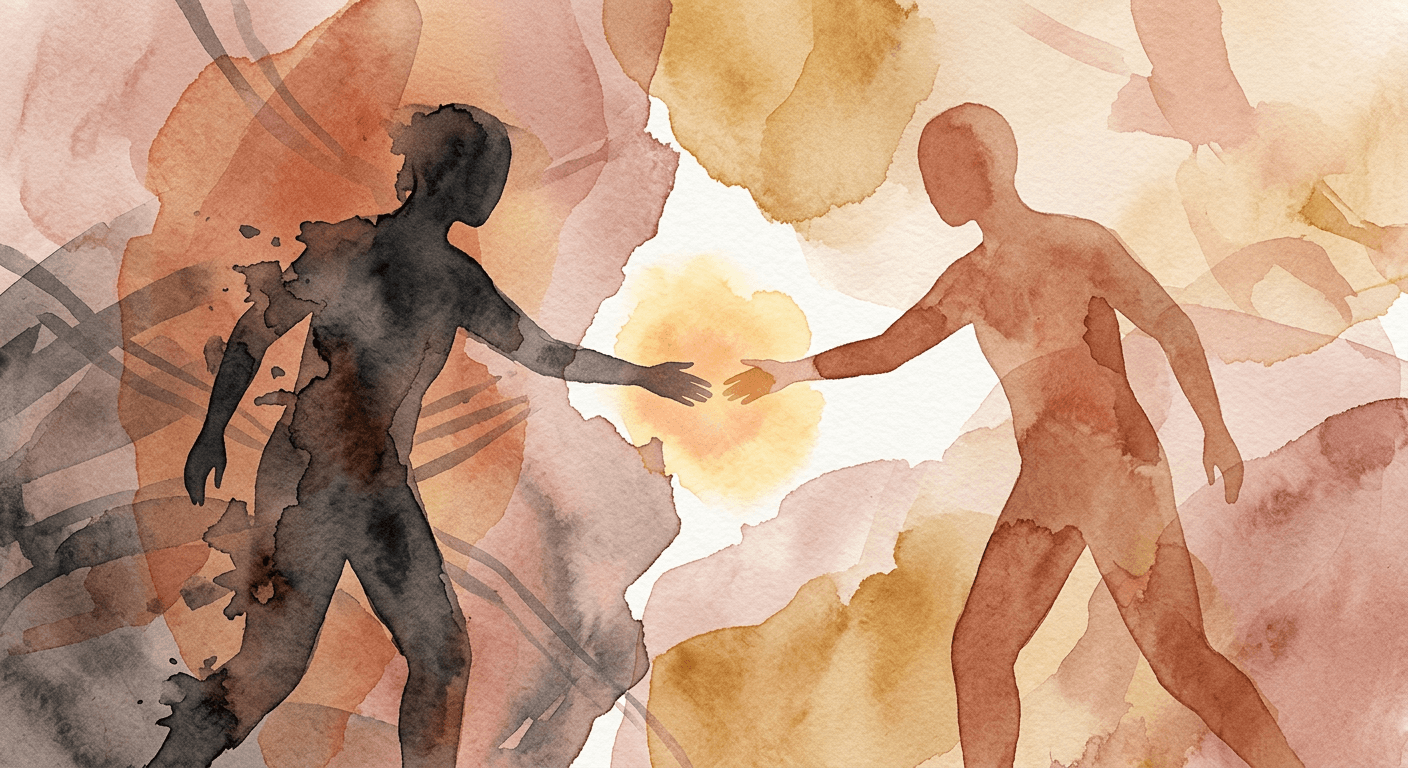
We've all heard the adage, "The past is in the past." But for many of us, and for the partners we choose, the past isn't just a distant memory; it's an uninvited guest at every dinner date, a silent observer in every argument, and a persistent whisper in the quiet moments of intimacy. Specifically, we're talking about the profound, often invisible, impact of past trauma on our current romantic relationships. It's a topic that demands our attention, not to assign blame, but to foster understanding and cultivate healing.
Understanding the Roots: Trauma and Attachment
The Psychology Today article beautifully underscores a critical connection: "research demonstrates that the consequences of childhood trauma are closely associated with insecure attachment styles, pathological jealousy..." This isn't a minor detail; it’s a foundational truth. Our early experiences, particularly with caregivers, shape our internal working models of relationships – how we expect others to treat us, how we view ourselves, and how we cope with emotional closeness and distance. Trauma, especially in childhood, can severely disrupt this development, leading to attachment wounds that manifest in adult relationships in surprisingly predictable, yet often painful, ways.
The Insecure Attachment Spectrum: Anxious, Avoidant, and Disorganized
Let's unpack those insecure attachment styles. When trauma is involved, especially early relational trauma, it often creates a deep-seated fear of abandonment or engulfment.
- Anxious Attachment: This often stems from inconsistent caregiving – sometimes available, sometimes not. As adults, this translates into a desperate need for closeness, constant reassurance, and a fear of being unloved or rejected. You might find yourself "chasing" your partner, overthinking every text, or feeling intensely jealous even without concrete reasons. The fear of loss is so overwhelming that it can ironically push partners away.
- Avoidant Attachment: This style typically develops when caregivers were consistently unavailable or dismissive of emotional needs. Children learn to suppress their emotional needs to maintain a semblance of connection. In adulthood, this manifests as a fear of intimacy, a strong emphasis on independence, and a tendency to pull away when relationships get too close. You might struggle to express vulnerability, feel suffocated by your partner's need for connection, or consistently find reasons to keep an emotional distance.
- Disorganized Attachment: This is often the most directly linked to trauma, particularly abuse or neglect from a primary caregiver. The caregiver is simultaneously a source of comfort and fear. This creates an internal conflict: a desire for closeness mixed with an intense fear of it. In relationships, this can look like a push-pull dynamic – craving intimacy one moment, then lashing out or withdrawing the next. It’s characterized by unpredictable behavior, extreme emotional swings, and a deep struggle with trust.
Pathological Jealousy: A Symptom of Deeper Wounds
The Psychology Today piece specifically highlights "pathological jealousy." This isn't your garden-variety, fleeting moment of insecurity. Pathological jealousy is an intense, irrational, and often obsessive preoccupation with a partner's perceived infidelity, even in the absence of evidence. It can be incredibly destructive, leading to constant questioning, surveillance, controlling behaviors, and accusations. At its core, this level of jealousy isn't about the partner's actions; it’s about the individual's profound fear of abandonment and betrayal, often rooted in past experiences where trust was violated or safety was compromised. It’s a desperate, albeit misguided, attempt to control an outcome that feels terrifyingly out of control.
How Trauma Shows Up in Your Dating Life
So, how does this manifest when you're just trying to find a nice guy for brunch?
- Dating the "Fixer-Upper" or the "Unavailable": You might unconsciously gravitate towards partners who mirror the chaos or emotional unavailability of your past, hoping to "fix" them or finally earn the love you never received.
- The Sabotage Cycle: When things start to get good, you might unconsciously create drama, pick fights, or pull away, because deep down, comfort and stability feel unfamiliar and therefore, unsafe.
- Overreacting to Minor Triggers: A seemingly small comment or action from your partner can send you into a spiral of fear, anger, or despair, because it unconsciously taps into an old wound. For example, your partner being 15 minutes late might trigger intense abandonment fears from a childhood where you were often left alone.
- Difficulty with Trust and Vulnerability: You might struggle to fully open up, always keeping a part of yourself guarded, convinced that eventually, you'll be hurt or disappointed.
- Boundary Issues: Either you struggle to set firm boundaries, fearing rejection if you do, or you erect impenetrable walls, preventing true intimacy.
When Your Partner's Past Becomes Your Present
It's not just your past that can influence your relationships. Often, we find ourselves entangled with partners who are also carrying their own unhealed wounds. If your partner exhibits signs of insecure attachment, or struggles with unresolved trauma, it can significantly impact your connection. For instance, dating someone with an avoidant attachment style can leave you feeling constantly starved for affection and reassurance, while a partner with disorganized attachment might create a volatile and confusing dynamic. Recognizing these patterns in a potential or current partner isn't about diagnosing them; it's about understanding the dynamics at play and deciding if you can healthily navigate them.
Breaking the Cycle: Awareness is the First Step
The most crucial step in transforming these patterns is awareness. You can't change what you don't acknowledge. Start by reflecting on your own relationship history:
- What are the recurring themes in your past relationships?
- Do you tend to attract a certain "type" of partner, even if you try not to?
- How do you react under stress or conflict in a relationship? Do you withdraw, pursue, or lash out?
- What are your biggest fears in a relationship? Abandonment? Engulfment? Betrayal?
Journaling, meditation, and self-reflection can be powerful tools for uncovering these patterns.
Practical Steps Towards Healing and Healthier Connection
Healing from past trauma and reshaping attachment styles is a journey, not a destination. Here are actionable steps:
- Seek Professional Help: This is paramount. Trauma-informed therapy (like EMDR, CBT, Somatic Experiencing, or Internal Family Systems) can help you process past experiences, develop healthier coping mechanisms, and rewire your attachment patterns. A therapist can provide a safe space to explore these deep-seated fears and develop strategies for navigating them.
- Educate Yourself: Learn more about attachment theory and trauma. Understanding the "why" behind your (or your partner's) behaviors can reduce self-blame and foster empathy. Resources like the Psychology Today article are excellent starting points.
- Practice Self-Compassion: Be kind to yourself. These patterns developed as survival mechanisms. They were once necessary, even if they're no longer serving you. Shame only hinders healing.
- Develop Secure Self-Soothing Strategies: When triggered, instead of turning to your partner for regulation (which can sometimes overwhelm them or reinforce anxious patterns), learn to soothe yourself. This could be through mindfulness, exercise, creative outlets, or connecting with supportive friends.
- Communicate Effectively (and Safely): Once you have a better understanding of your triggers, try to communicate them to a trusted partner in a calm and clear way. Use "I" statements ("I feel scared when you don't respond to my texts quickly, because it reminds me of feeling abandoned as a child") rather than accusatory "you" statements. This requires a partner who is also willing to listen and engage with empathy.
- Set Healthy Boundaries: Learn to say no. Learn to communicate your needs. This is crucial for protecting your emotional well-being and fostering respect in the relationship.
- Choose Consciously: As you heal, you'll become more adept at identifying partners who are emotionally mature and capable of a secure attachment style. Don't settle for dynamics that perpetuate old wounds. Look for partners who are consistent, reliable, and emotionally available.
The Power of Secure Attachment: Earning It
While our early attachment experiences set a strong foundation, they are not our destiny. We can "earn" secure attachment. This means actively working on understanding and healing our past wounds, and intentionally choosing and cultivating relationships that foster security, trust, and mutual respect. A secure attachment is characterized by comfort with intimacy and independence, effective communication, and the ability to repair ruptures. It's a relationship where you feel seen, heard, and valued, and where you can rely on your partner while also maintaining your own sense of self.
Conclusion: Rewriting Your Love Story
The shadows of past trauma can feel overwhelming, but they don't have to define your future love story. By acknowledging their presence, understanding their impact on your attachment style, and bravely embarking on a journey of healing, you can begin to rewrite the narrative. This isn't about erasing your past; it's about integrating it, learning from it, and building a foundation for relationships that are truly reciprocal, loving, and secure. You deserve a love that feels safe, joyful, and deeply connected – a love that thrives in the present, unburdened by the ghosts of what once was.
Questions about Attachment Theory
What are the four attachment styles?
Secure, anxious-preoccupied, dismissive-avoidant, and fearful-avoidant (also called disorganized). Secure is the most common, at roughly 50-55% of adults; anxious and avoidant each account for about 20-25%, and fearful-avoidant for a small remainder.
Can your attachment style change?
Yes. Attachment style is a learned expectation, not a fixed trait. Longitudinal studies find roughly one in four adults shifts style over time, most often toward security through a consistently responsive partner, individual therapy, or deliberate practice in naming needs directly.
Why are anxious and avoidant people so often attracted to each other?
Each confirms the other's expectation. The anxious partner's pursuit reads as intensity, and the avoidant partner's distance reads as a challenge worth winning. The pairing feels familiar rather than good, which is why it is both common and draining.
Keep reading
- Guide: Understanding Your Attachment Style: A Research-Based Guide to How You Love
- Guide: Rebuilding Self-Worth: How to Stop Settling and Start Choosing
- Guide: Breaking Free from Codependency: A Research-Based Recovery Guide

Attachment Theory
The Importance of Knowing Your Partner's Attachment Style
The Importance of Knowing Your Partner’s Attachment Style Exploring attachment styles can prevent misattributions and boost connection. Posted October 12, 2026| Reviewed by Gary…
Summary of Psychologytoday · 14 min read

Attachment Theory
How Attachment Style Affects Your Health - Psychology Today
How Attachment Style Affects Your Health Evidence From Attachment Theory It's now clear that attachment style affects our health as early as adolescence. Another intriguing…
Summary of Psychologytoday · 11 min read

Attachment Theory
Relationship Attachment Group - Support Group in Seattle, WA, 98108
Single & Secure is a 12-week virtual group for women who want to feel calm, confident, and grounded while dating. We'll work on understanding your attachment ...
Summary of Psychologytoday · 9 min read
Comments
No comments yet.