Modern Dating Culture · 10 min read
Why So Many Young People Feel Doomed About Straight Dating
Why are so many people giving up on heterosexual relationships? The answer lies in politics, inequality, and rising heteropessimism.
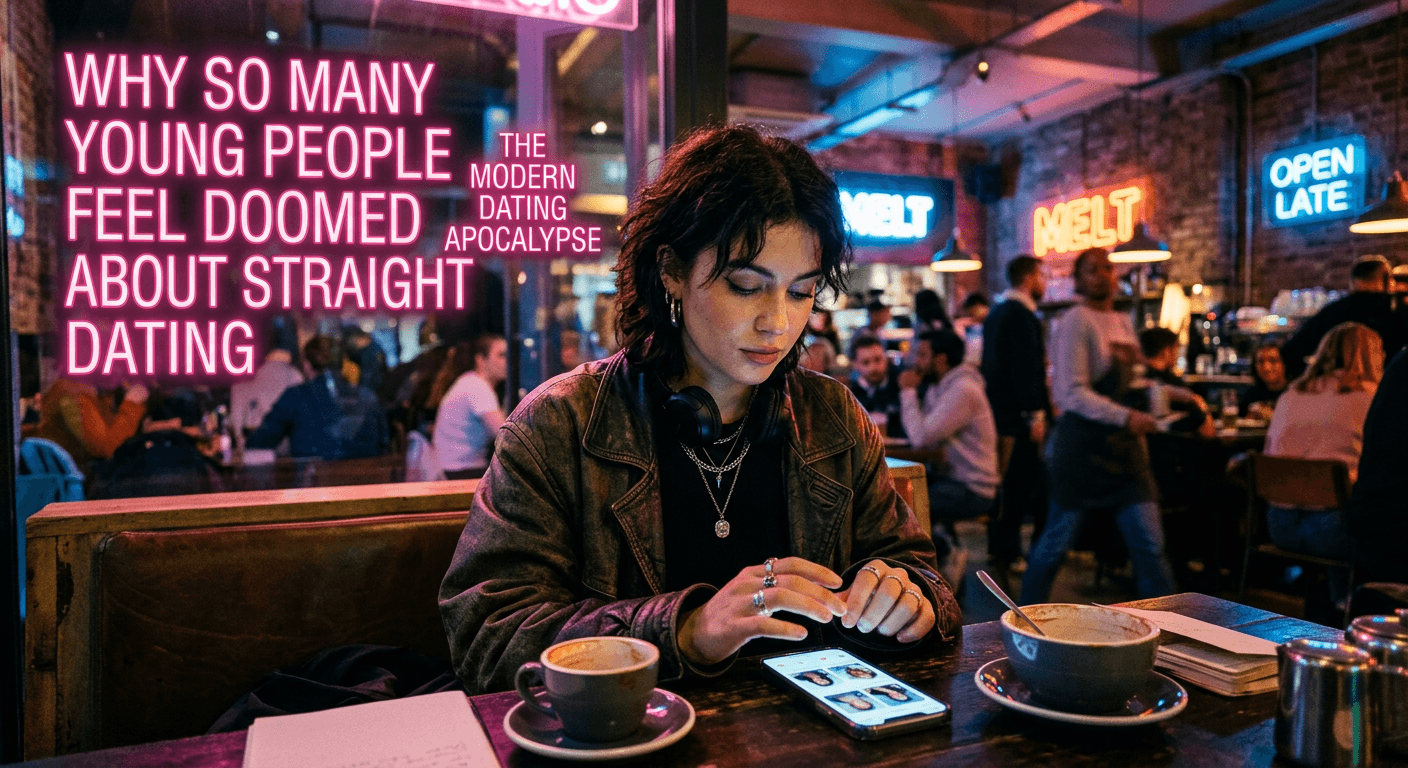
Staff Writer · April 12, 2026
Our take
Okay, ladies, let's talk real. We've all felt it – that creeping dread, that cynical sigh when another dating app swipe yields... well, nothing. Psychology Today recently dropped a bombshell, diving into why so many young people are feeling "doomed" about straight dating, attributing it to everything from politics to inequality. This isn't just a fleeting mood; it's a systemic shift impacting how we, as modern women, approach finding a meaningful connection. Understanding these underlying currents isn't about wallowing in despair, but about equipping ourselves with the knowledge to navigate this complex landscape, redefine our expectations, and ultimately, reclaim our dating power.
Key takeaways
- Ever found yourself scrolling through social media, seeing countless memes lamenting the state of modern dating, specifically between men and women?
- It might sound dramatic to link your dating woes to global politics, but the Psychology Today piece astutely highlights how deeply intertwined they are.
- One of the most salient points in the Psychology Today article is the role of persistent inequality.
- Dating apps, while offering an unprecedented pool of potential partners, have also contributed to a culture of disposability.
The Great Dating Despair: Understanding Heteropessimism
Ever found yourself scrolling through social media, seeing countless memes lamenting the state of modern dating, specifically between men and women? Or perhaps you’ve been on a string of first dates that left you feeling more exhausted than excited, prompting a friend to jokingly suggest you just adopt 10 cats? You’re not alone. The Psychology Today article zeroes in on a phenomenon they call "heteropessimism," a pervasive sense of gloom and doom surrounding heterosexual relationships, particularly among younger generations. It's more than just individual bad experiences; it's a collective cultural sentiment that suggests straight relationships are inherently flawed, doomed to fail, or simply not worth the effort.
This isn't to say that all criticism of heteronormative structures is invalid – far from it. But the sheer pervasiveness of this pessimism is impacting how we enter, maintain, and even think about dating. For women, this often translates into a heightened sense of vigilance, a readiness for disappointment, and a jaded outlook that can inadvertently repel the very connections we seek. If we start every interaction with the expectation of failure, how can we truly open ourselves up to success?
The Political Undercurrents of Our Love Lives
It might sound dramatic to link your dating woes to global politics, but the Psychology Today piece astutely highlights how deeply intertwined they are. We are living in an era of unprecedented political polarization and social upheaval. Issues like gender equality, reproductive rights, and systemic injustices are not just headlines; they are lived experiences that fundamentally shape our values and our expectations of partners.
For many women, the realization that a potential partner might not align with their core political or social beliefs is a dealbreaker, and rightly so. The stakes feel higher. It's no longer just about shared hobbies but about shared ethical foundations. We've seen, firsthand, how different perspectives on fundamental human rights can create irreconcilable chasms. This isn't superficial; it's deep. When the world feels unstable, we seek stability and shared purpose in our intimate relationships, and the absence of that alignment can feel like a profound threat to our well-being and future.
The Inequality Gap: A Persistent Thorn
One of the most salient points in the Psychology Today article is the role of persistent inequality. Despite advances, women still bear a disproportionate burden in many areas of life, from emotional labor to domestic responsibilities. This imbalance inevitably seeps into romantic relationships. Many women are tired of feeling like they need to "train" their partners or constantly educate them on basic concepts of respect and shared responsibility.
Consider the mental load: the invisible work of planning, remembering, and organizing that often falls to women. From scheduling appointments to remembering birthdays, stocking the fridge to managing household finances – it's exhausting. When dating, women are often unconsciously (or consciously) assessing if a potential partner will contribute equally, or if they'll add to this already heavy load. The fear of ending up with a partner who expects to be parented, rather than partnered, is a very real deterrent. This isn't about being picky; it's about self-preservation and demanding equitable partnership.
The Rise of Disposability and the Paradox of Choice
Dating apps, while offering an unprecedented pool of potential partners, have also contributed to a culture of disposability. The Psychology Today article alludes to this indirectly by discussing the ease with which people move on when things get tough. With an endless scroll of faces, why invest in working through minor disagreements when you can just find someone else?
For women, this often means encountering partners who are less willing to commit, less invested in deep emotional labor, and quicker to ghost or fade away. The paradox of choice means that while we have more options, we also face more superficiality and a diminished sense of individual value. It can feel like you're constantly auditioning, rather than building genuine connections. This environment fosters anxiety and makes it harder to trust that someone will truly stick around and invest in you.
Redefining "Success" in a Jaded Landscape
Given this backdrop of heteropessimism, political divides, and inequality, it's easy to feel defeated. But the "Next Boyfriend Take" isn't about wallowing; it's about empowerment. The first step is to redefine what "success" in dating looks like for you. Is it marriage? A long-term partnership? Casual dating with clear boundaries? Self-discovery? There's no single right answer, and freeing yourself from rigid societal expectations is crucial.
Perhaps success means having fewer dates, but more meaningful ones. Perhaps it means prioritizing self-growth and friendships, and letting romantic relationships unfold organically without pressure. When we shift our focus from "finding a partner at all costs" to "finding a partner who truly enhances my already fulfilling life," our entire approach changes. This reframing empowers us to be more selective, more confident, and less susceptible to the cyclical doom-and-gloom narratives.
Actionable Advice: Navigating the New Normal
So, what's a modern woman to do in this seemingly "doomed" dating landscape?
Get Crystal Clear on Your Non-Negotiables: Before you even swipe, sit down and list your absolute deal-breakers. These aren't preferences; they're the core values and behaviors you cannot compromise on. This might include political alignment, commitment to equality, emotional maturity, or financial stability. Having this clarity acts as a powerful filter.
Practice Intentional Dating: Instead of endlessly swiping and going on a merry-go-round of mediocre dates, try intentional dating. This means:
- Quality over Quantity: Limit your app usage. Focus on fewer, more promising connections.
- Pre-Screening: Don't be afraid to ask deeper questions early on (respectfully, of course). A quick phone call or a few thoughtful messages can save you a wasted evening.
- Setting Boundaries: Be clear about what you're looking for and what you're not. If someone isn't aligning with your goals, gracefully exit.
Cultivate Your Inner World: When the outside dating world feels chaotic, your inner world needs to be your sanctuary. Invest in your hobbies, friendships, career, and personal growth. A full, rich life makes you a more attractive and resilient individual, less dependent on external validation from a partner. Plus, a fulfilling life is often where you organically meet like-minded people.
Embrace "Heteroskepticism" (Not Pessimism): Instead of full-blown heteropessimism, adopt a healthy "heteroskepticism." This isn't cynicism, but a critical awareness. It means:
- Questioning Norms: Don't blindly accept traditional gender roles or relationship dynamics.
- Observing Behavior: Pay attention to actions, not just words. Does a potential partner walk the talk when it comes to equality, respect, and emotional labor?
- Trusting Your Gut: If something feels off, it probably is. Your intuition is a powerful tool.
Build a Supportive Community: Surround yourself with friends who uplift you and offer realistic, empathetic advice. Share your dating experiences – the good, the bad, and the ugly. Knowing you're not alone in your struggles can significantly reduce feelings of despair. Your "Next Boyfriend" community is here for you!
The Power of Reclaiming Your Narrative
The Psychology Today article paints a stark picture, and it's easy to internalize that gloom. But as women, we have the power to reclaim our dating narratives. We are not passive recipients of dating trends; we are active participants who can shape our experiences. When we understand the systemic issues at play – the political influences, the inequality, the app culture – we can approach dating with open eyes, intelligent strategies, and an unwavering commitment to our own worth.
This doesn't mean ignoring the challenges. It means acknowledging them, understanding their roots, and then refusing to let them dictate our emotional well-being or our potential for genuine connection. It means being brave enough to ask for what we deserve, to walk away from what doesn't serve us, and to trust that even in a "doomed" landscape, a truly fulfilling relationship is still possible – especially when we become the authors of our own love stories.
Real-World Scenarios: From Frustration to Empowerment
Let's consider a common scenario: Sarah, 28, is exhausted. She's been on countless dates where men talk over her, expect her to plan everything, or make thinly veiled misogynistic comments. She feels the heteropessimism deeply. Instead of giving up entirely, Sarah decides to implement some of our advice.
First, she lists her non-negotiables: emotional intelligence, active listening, and a demonstrated commitment to gender equality. She then updates her dating app profile to subtly reflect these values, using language that signals her expectations. During initial chats, she starts asking more open-ended questions about how they approach teamwork or handle disagreements, rather than just small talk. If she notices red flags – like constant interruption or dismissive language – she politely ends the conversation before a date is even scheduled.
Sarah also prioritizes her social circle and her passion for hiking. It's during a group hike that she meets Mark, who genuinely listens, shares anecdotes about his own experiences with fostering equality in his workplace, and offers to help plan their first date. Sarah still approaches with healthy skepticism, but her clear boundaries and intentional approach have filtered out much of the noise, allowing a potentially healthier connection to emerge. She’s not "doomed"; she's discerning.
Looking Ahead: Hope in a Nuanced Reality
The "doom" about straight dating isn't an absolute truth; it's a prominent narrative shaped by very real societal forces. For women, understanding these forces is the first step toward navigating them successfully. We can acknowledge the frustrations without succumbing to despair. We can be critical of existing norms while still holding onto the hope for meaningful partnership.
The future of dating isn't about giving up; it's about evolving. It's about women standing firm in their values, demanding equitable treatment, and refusing to settle for anything less than a partner who truly sees them, respects them, and values their contribution. It's about recognizing that our worth is not tied to our relationship status, but that a healthy, fulfilling relationship can indeed be a beautiful addition to an already rich life. So, ladies, let's ditch the doom and embrace a more empowered, intentional, and hopeful approach to finding our next, truly deserving boyfriend.
Questions about Modern Dating Culture
What is a situationship?
A romantic relationship with the intimacy of dating but no agreed definition, exclusivity, or trajectory. It is distinguished from casual dating by the fact that at least one person usually wants more but has not asked.
Why do people ghost?
Mostly conflict avoidance rather than malice. Ending things explicitly requires tolerating someone's disappointment; disappearing costs nothing when you have no shared social network. Frequency rises with the number of concurrent options.
How do you get clarity without seeming needy?
Ask once, directly, and early — a plain question about what someone is looking for is not a demand. Someone who reacts badly to a calm question about intent has answered it.
Keep reading
- Guide: The Intentional Dating Guide: How to Date with Purpose, Not Just Hope
- Guide: The Complete Guide to Setting Boundaries in Relationships

Modern Dating Culture
Why Deep People Struggle in Modern Relationships
Modern dating rewards speed, but deep connection requires time and cannot be rushed. Dating apps create pressure to perform quickly or be replaced, ...
Summary of Psychologytoday · 11 min read

Modern Dating Culture
Has the manosphere ruined dating? | The global dating crisis
Globally, the number of single people is on the rise. Rates of marriage and cohabitation are on the decline, and in some countries, even sex itself is down.
Summary of Theguardian · 8 min read

Modern Dating Culture
"Love Island USA" Season 8 and Modern Dating's ...
Modern dating has evolved, but the foundations of healthy relationships have not. · Too many options can make it harder to fully invest in a relationship.
Summary of Psychologytoday · 10 min read
Comments
No comments yet.